NRaaS Dashboard
The NRaaS Dashboard also known as Nuance Recognizer as a Service Dashboard collects visualizations of NR metrics such as the number of successful vs. unsuccessful transactions, average transaction durations, and average latency. The dashboard represents data graphically. To see this data in a tabular format, you can click the NRaaS Details Report tab or drill down on any of the dashboard's visualizations.
In addition to the use of dashboard filters, Nuance Insights allows you to manipulate displayed data through several other means in order to better visualize information. Select from the following to learn more:
-
Selecting a data subset in one visualization to add specificity in other visualizations
-
Drilling down from a summary (or dashboard) report to a more detailed report
Visualizations
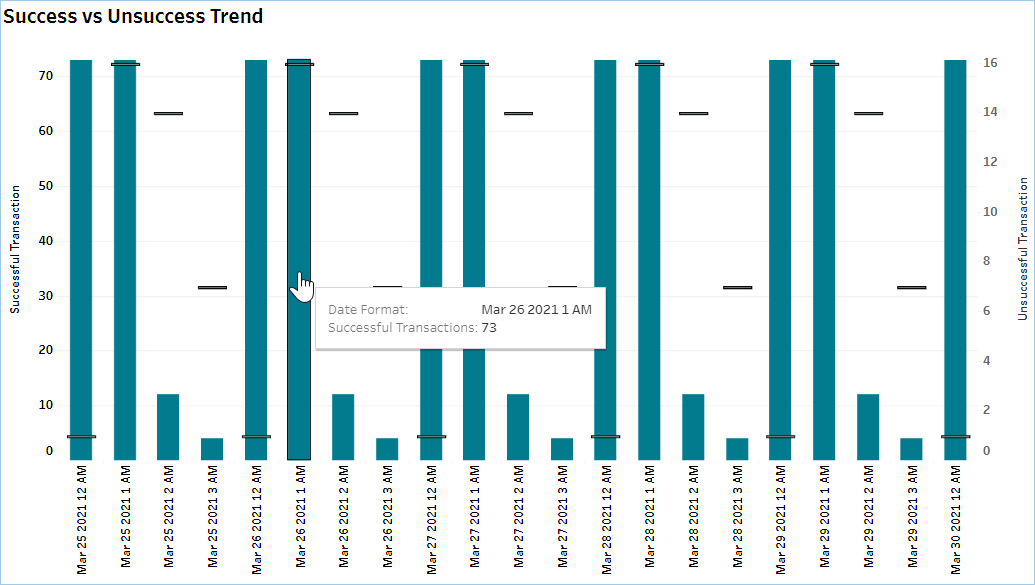
Success vs Unsuccess Trend
This graph displays number of successful and unsuccessful transactions over time. A successful transaction returns a payload while an unsuccessful transaction does not return a payload. Canceled, No Match, Resources Unavailable, Bad Audio, No Audio or API Non-Adherence can be the reasons for an unsuccessful transaction.
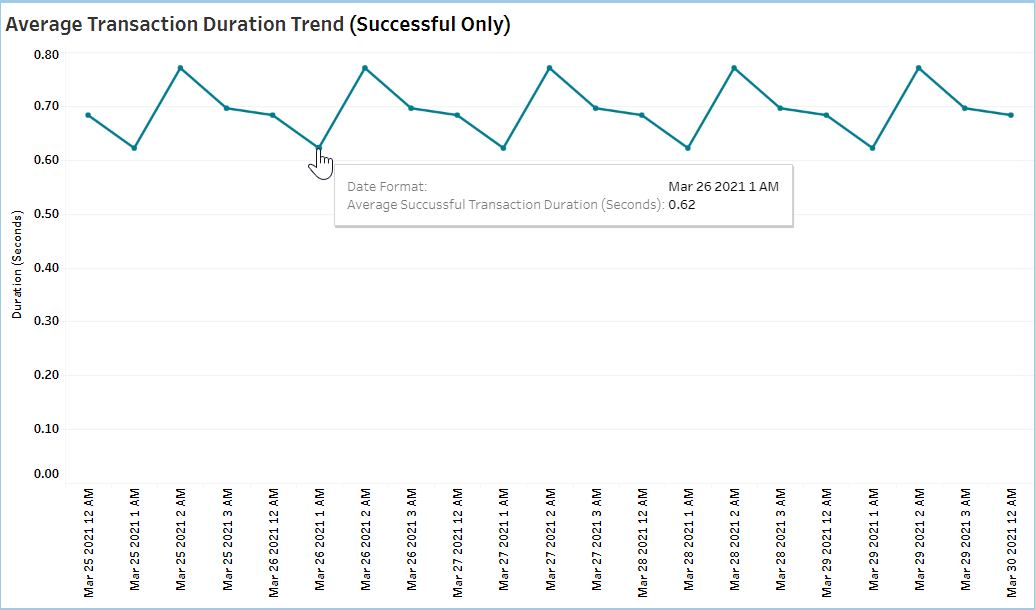
Average Transaction Duration Trend (Successful Only)
This graph plots the change over time in the average duration of successful transactions for consecutive blocks of time.
Use the Date Granularity slider to adjust the length of time for each data point during which data is averaged.
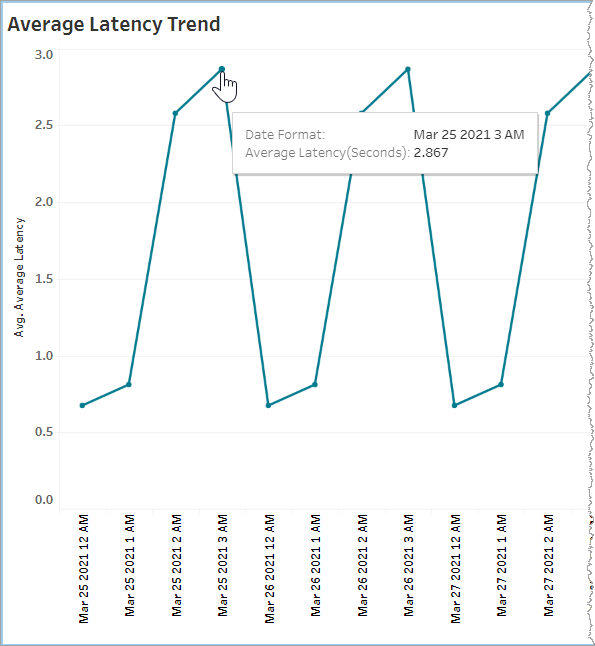
Average Latency Trend
This graph plots the change over time in the average latency for consecutive blocks of time, each with a duration defined by time granularity (Date Granularity slider).
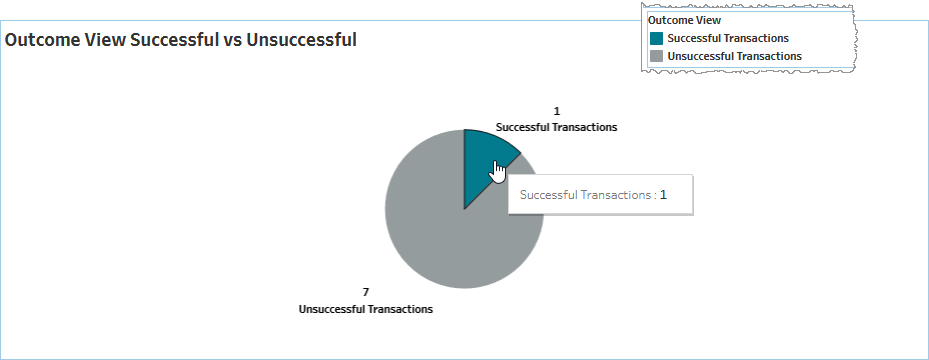
Outcome View Successful vs Unsuccessful
This donut chart visualizes the proportional distribution of transaction outcomes, broadly split into successful and unsuccessful categories. Mouse over any part of the chart for a tooltip with relevant information.
This metric is divided into two categories:successful and unsuccessful transactions.
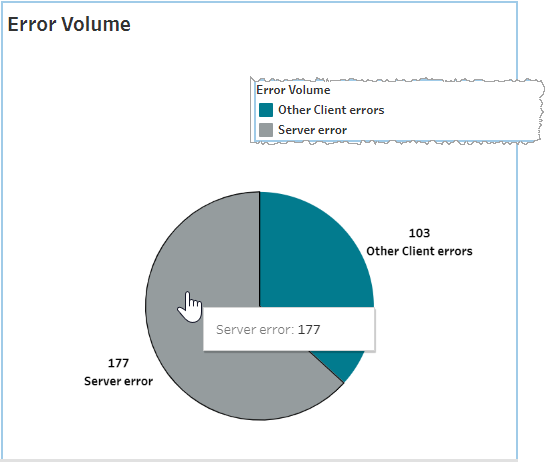
Error Volume
This donut chart visualizes the proportional distribution of error volume, broadly split out into the raw counts of client and server errors respectively. Mouse over any part of the chart for a tooltip with relevant information.
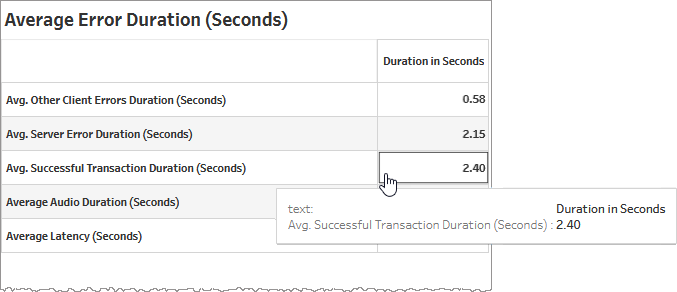
Average Error Duration (Seconds)
This table lists average durations in seconds of client and server errors, respectively. The table also lists the average durations of successful transactions, audio, and latency.
Filtering
The filters in this section allow you to reduce the volume of displayed data on the dashboard.
Date
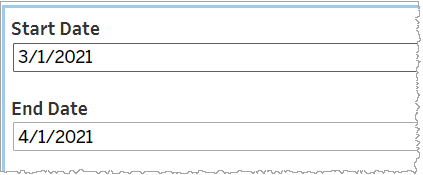
The Start Date and End Date filter allows you to specify start and end points to the date range by clicking the Start Date and End Date sections respectively, and then manually entering a new date.
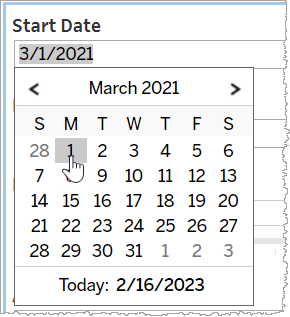
To select a date with the date picker, click the Start Date section to pick a date from the date picker widget. Do the same with the End Date section.
Note: By default the End Date displayed will be current date and Start Date will be 14 days less than the current date.
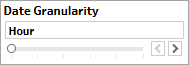
Date Granularity
The Date Granularity filter allows you to adjust the reported data granularity described by the trend lines. Drag the slider horizontally to adjust the granularity of reported data. Alternatively, you can use the left  and right
  arrow buttons to move the slider incrementally.
AppID
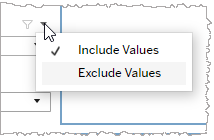
This filter selectively reduces the volume of data displayed based on application ID. The filter reduces data by including or excluding one or several applications. Specify one or more applications from the list as required.
Click Include values to display only those data possessing the selected values. All other data are hidden from the visualization.
Click Exclude values to display only those data that do not possess the selected values.
Language
This filter refers to the language spoken in the conversation. With this filter, you can select one or more languages in a drop-down list.
OrgID
Select one, several or all ids to filter by OrgID.
Custom filters
This report accommodates customizable filters.
Customizable filters narrow the scope of the reported dataset by including or excluding data with identifiable attributes. These attributes may be about the session or about an event that may have happened during the session.
For more information about how to add customized filters to your view, contact your Nuance Professional Services representative.
Note: If you would like to modify this or any report, Nuance Communications, Inc. recommends you contact Nuance Professional Services.
